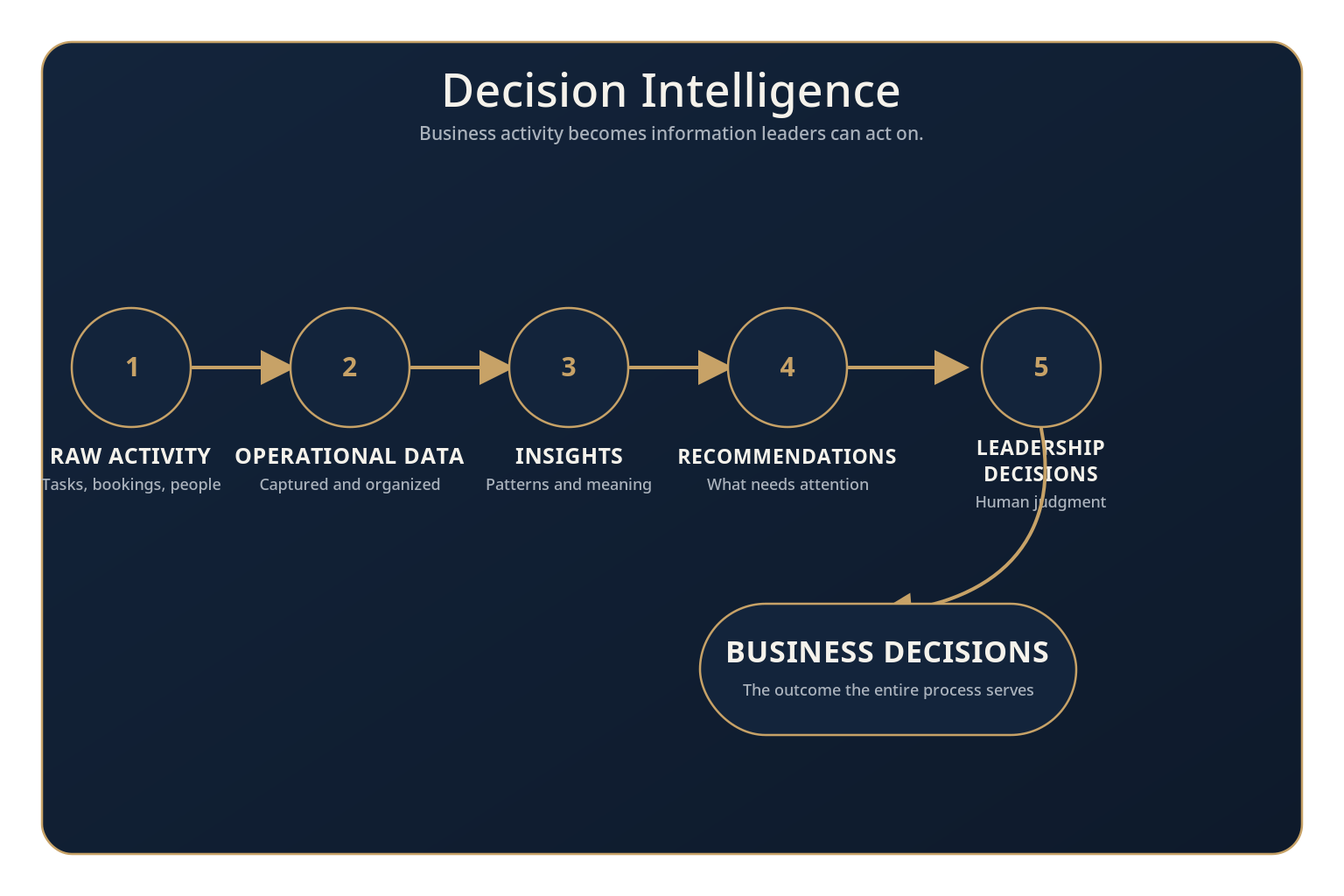
Operational Intelligence is the continuous process of transforming operational activity into better leadership decisions.
Operational discipline does.
Many organizations invest in software expecting technology to solve operational problems.
Technology can accelerate good operations. It cannot replace them.
When expectations are unclear, documentation is missing, accountability is inconsistent, or leaders lack visibility, adding more software often increases complexity rather than reducing it.
Valet begins somewhere different. We begin with the business.
Operational Intelligence connects information, people, systems, accountability, and execution into one operating model.
Instead of asking“What software should we buy?”
We ask“How should this business operate?”
Once that answer becomes clear, technology supports the system rather than defining it.
Leaders need a clear understanding of what is happening across the organization. Without visibility, improvement becomes guesswork.
Clear expectations supported by measurable ownership create consistent performance.
Operational systems should make leadership easier—not more complicated. The stronger the systems become, the more effectively leaders can coach, develop, and grow their teams.
Plans create potential. Execution creates results. Operational Intelligence exists to improve daily execution throughout the organization.
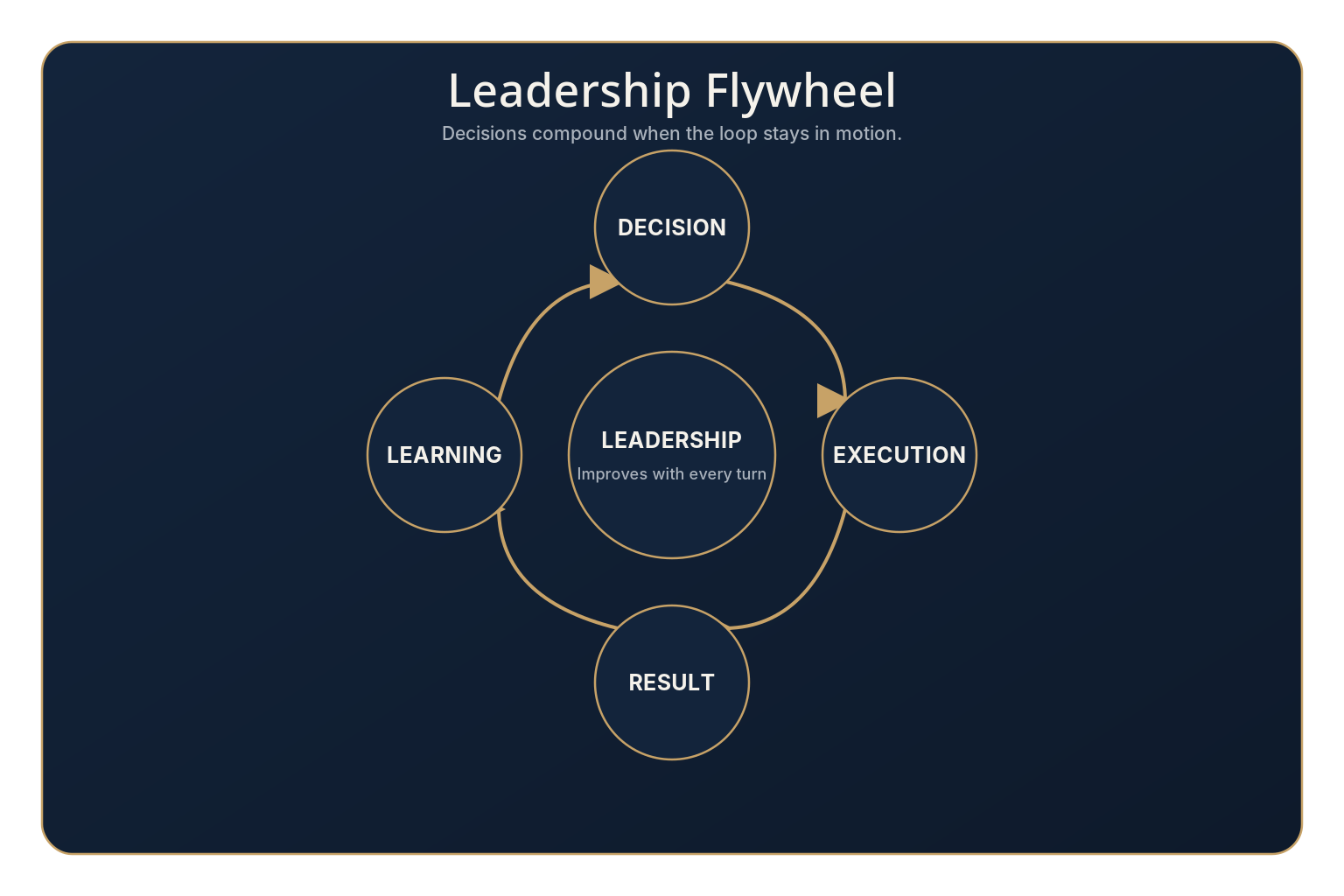
Every improvement inside Valet ultimately strengthens one or more of those outcomes.
Operational Intelligence compounds over time. Organizations become stronger because they continuously improve the way they operate.
Rather than delivering recommendations alone, Valet focuses on building repeatable operational systems that continue creating value over time.
Yes. The operational principles remain consistent while workflows and industry requirements adapt through the platform’s three-layer architecture.
No. Organizations of all sizes benefit from stronger operational discipline, leadership systems, and visibility.